
Environment

Realization of a Decarbonized Society

リード文

ONO considers global warming and other climate changes to be a major threat to people's health and recognizes them as important issues that affect the continuity of our business activities. For these reasons, the Environment Management Committee, whose activities cover the entire company, and the Carbon Neutrality Sub-Committee, which was established under it, take the initiative to engage in various activities to achieve a decarbonized society.

ONO PHARMACEUTICAL CO.,LTD., ONO PHARMACEUTICAL CO.,LTD., system

Analysis and Evaluation of Risks and Opportunities related to Climate Change

Risks and opportunities related to climate change are investigated under the leadership of the Environment Management Committee and the TCFD Working Group. They identify, analyze, and evaluate risks and opportunities that may have an impact on our business. For more details, please refer to our disclosure based on the TCFD Recommendation.

ONO PHARMACEUTICAL CO.,LTD., ONO PHARMACEUTICAL CO.,LTD., system

Targets and Progress

We are moving ahead with activities to achieve our medium- to long-term environmental targets.

Our medium- to long-term environmental targets Results for FY2025
Greenhouse Gas Emissions
(Scope 1+2)
  • Achieve carbon neutrality by FY2025(virtually zero greenhouse gas emissions by offsetting with voluntary carbon credits)
  • Achieve zero greenhouse gas emissions by FY2035
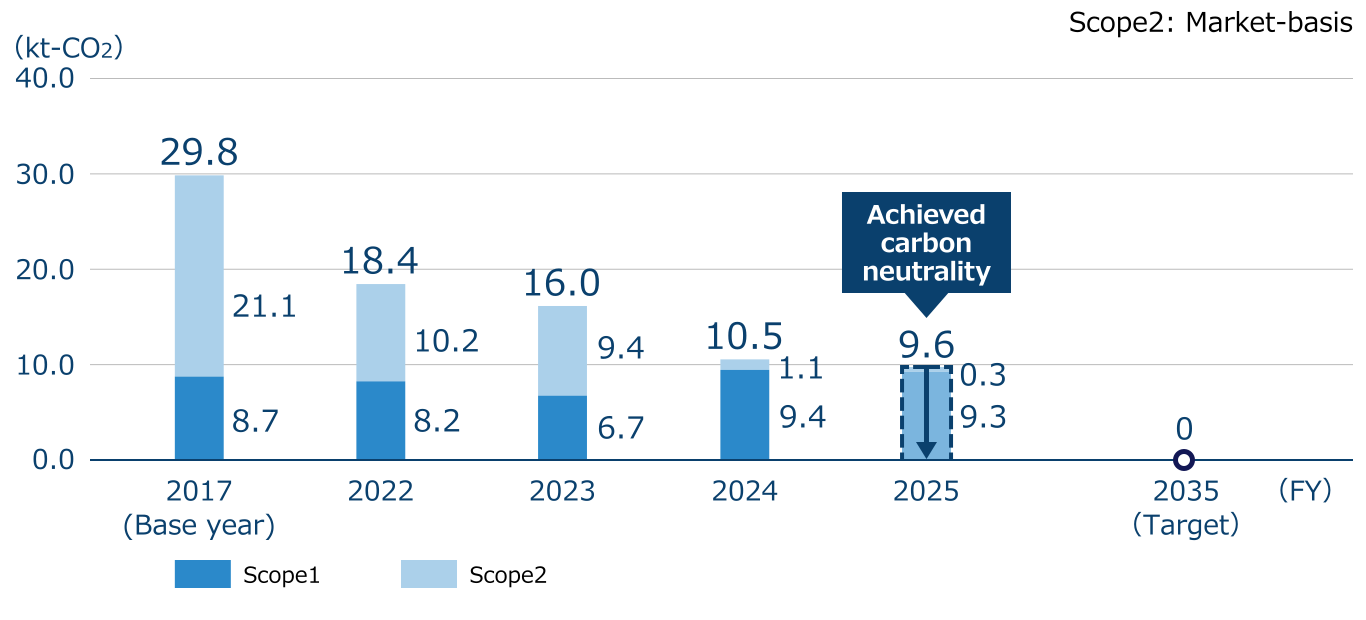
  • Achieved carbon neutrality by FY2025
Renewable Energy Rate in purchased electricity
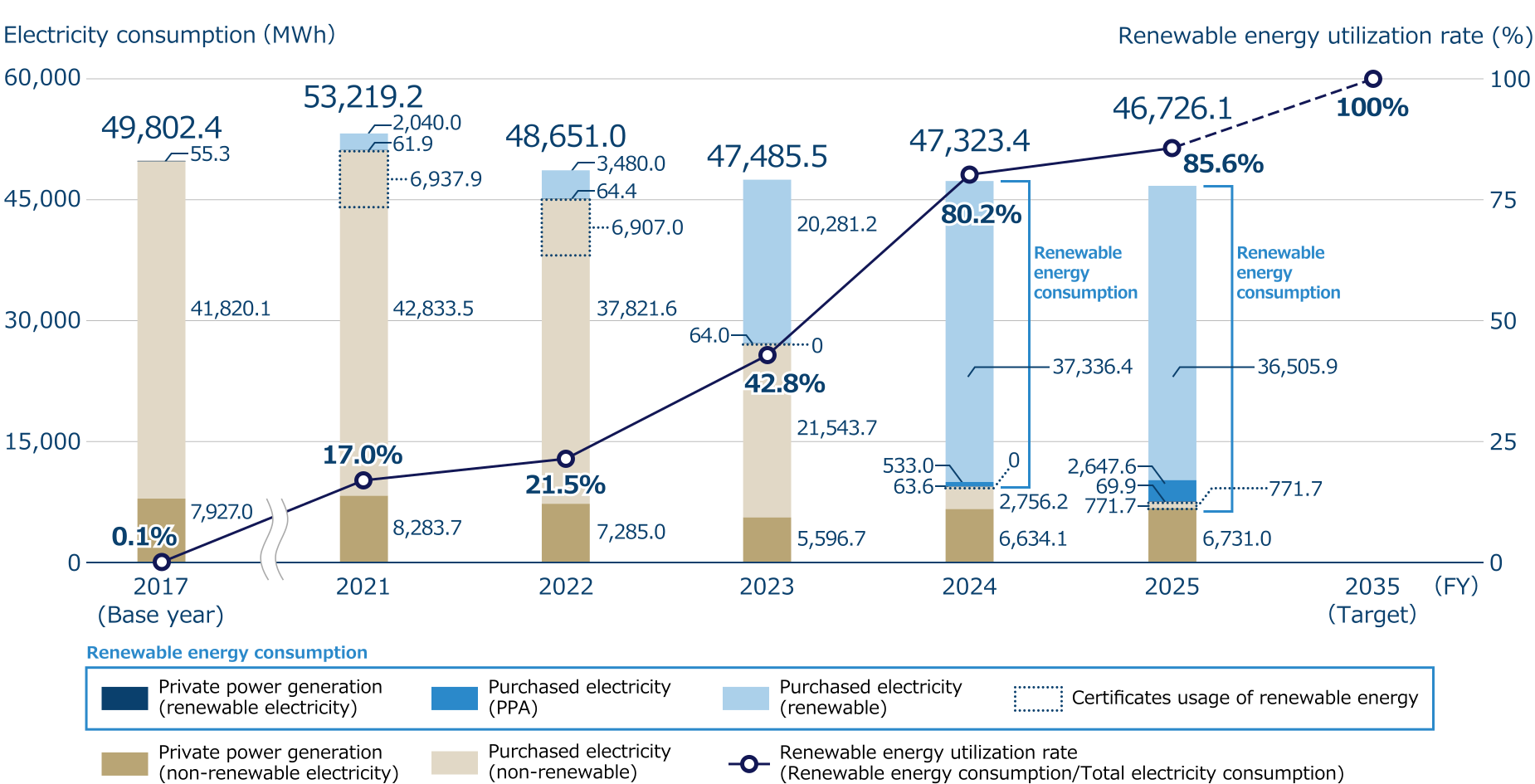
  • Achieve 100% by FY2025
    1. Coverage: ONO’s operation sites 
  • Result: 100%
    1. Coverage: ONO’s operation sites

We have achieved all of the targets set until FY2025 for achieving our medium- to long-term targets. We offset Scope 1 GHG emissions by purchasing carbon-offset city gas at all of our major facilities (Fujiyama Plant, Yamaguchi Plant, Minase Research Institute, Tsukuba Research Institute, and Joto Pharmaceutical Product Development Center), and offset the remaining approximately 2,500 metric tons of CO2 using carbon credits. In addition, with regard to our Scope 2 GHG emissions, we achieved 100% renewable energy for the electricity purchased by all of ONO’s domestic business locations. Furthermore, starting in FY2024, part of the electricity contracts for the Minase Research Institute, the Joto Pharmaceutical Product Development Center, and our Headquarters were switched to PPAs (Power Purchase Agreements). As a result, in FY2025, we offset only the approximately 320 metric tons of CO2 emissions generated by tenant buildings—such as branch offices where it is difficult to switch to renewable energy—using carbon credits.

Scope 1+2 Greenhouse gas emissions*1
graph

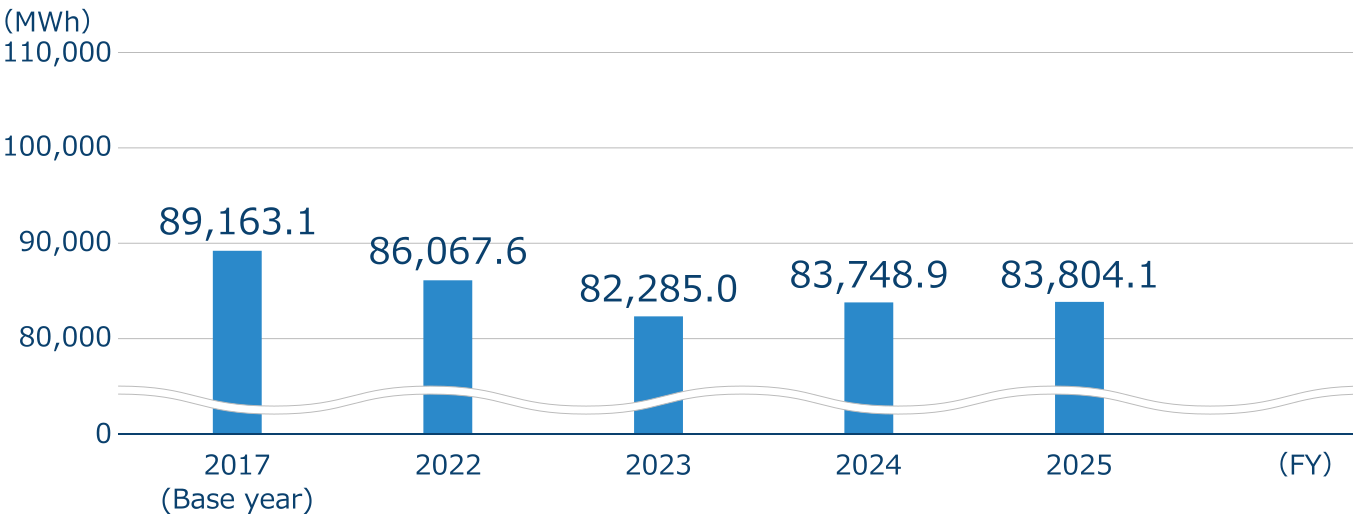
Energy consumption

graph

Electricity consumption and renewable energy utilization rate
graph
  • Locations covered by the above three graphs: Fujiyama Plant, Yamaguchi Plant (added from FY2018), Joto Pharmaceutical Product Development Center, Minase Research Institute, Tsukuba Research Institute, Fomer Fukui Research Institute, Headquarters, Head Office, Tokyo Building, business locations, and tenant offices.
  • GHG emissions are calculated in accordance with Act on Promotion of Global Warming Countermeasures.
ONO PHARMACEUTICAL CO.,LTD., ONO PHARMACEUTICAL CO.,LTD., system

Reduction Policy

We have established a policy for reducing GHG emissions based on recent energy market trends, costs, and projected changes in emission factors. Our priority measures are avoidance (creating systems that do not use energy), reduction (promoting energy conservation activities), substitution (switching to renewable energy sources, etc.), and offsetting (offsetting through the use of credits).
In addition, in order to promote low-carbon investments and climate change prevention measures, we have set our own internal price for carbon dioxide (CO2) emissions, introduced internal carbon pricing to be used for making investment decisions, and are promoting investments geared toward realizing a decarbonized society.

ONO PHARMACEUTICAL CO.,LTD., ONO PHARMACEUTICAL CO.,LTD., system

Initiatives to reduce Scope 1+2 GHG emissions

Scope 1+2 GHG emissions Reduction Roadmap

figure

ReducePromotion of energy-saving activities

Operational Improvement
  • Recover heat from high-temperature wastewater and use it as a heat source
  • Reduce boiler gas consumption and reduce the amount of water used to cool hot wastewater by recovering condensate from steam headers to raise the temperature of boiler feedwater.
  • Review of operations such as equipment operating hours and temperature settings
    Most of our energy consumption comes from air conditioning equipment, so we are reviewing the operating hours and temperature settings of air conditioning equipment to an extent that does not affect the quality of our products. At all sites, we compare monthly usage data for electricity, gas, and water by building and major equipment with the same month of the previous year, investigate the causes of any increases or decreases, and promptly implement improvements. These usage data are also shared with the Carbon Neutrality Sub-Committee under the Environment Management Committee.
    At the Yamaguchi Plant, the monitoring system has been modified to monitor the upper limits of utilities such as electricity, city gas, steam, and water supply. The 13 monitoring systems installed manage upper usage limits every hour, and if unusual usage is detected based on historical maximums, an alert is issued. This enables early detection and response to equipment failures or leaks due to aging pipes.
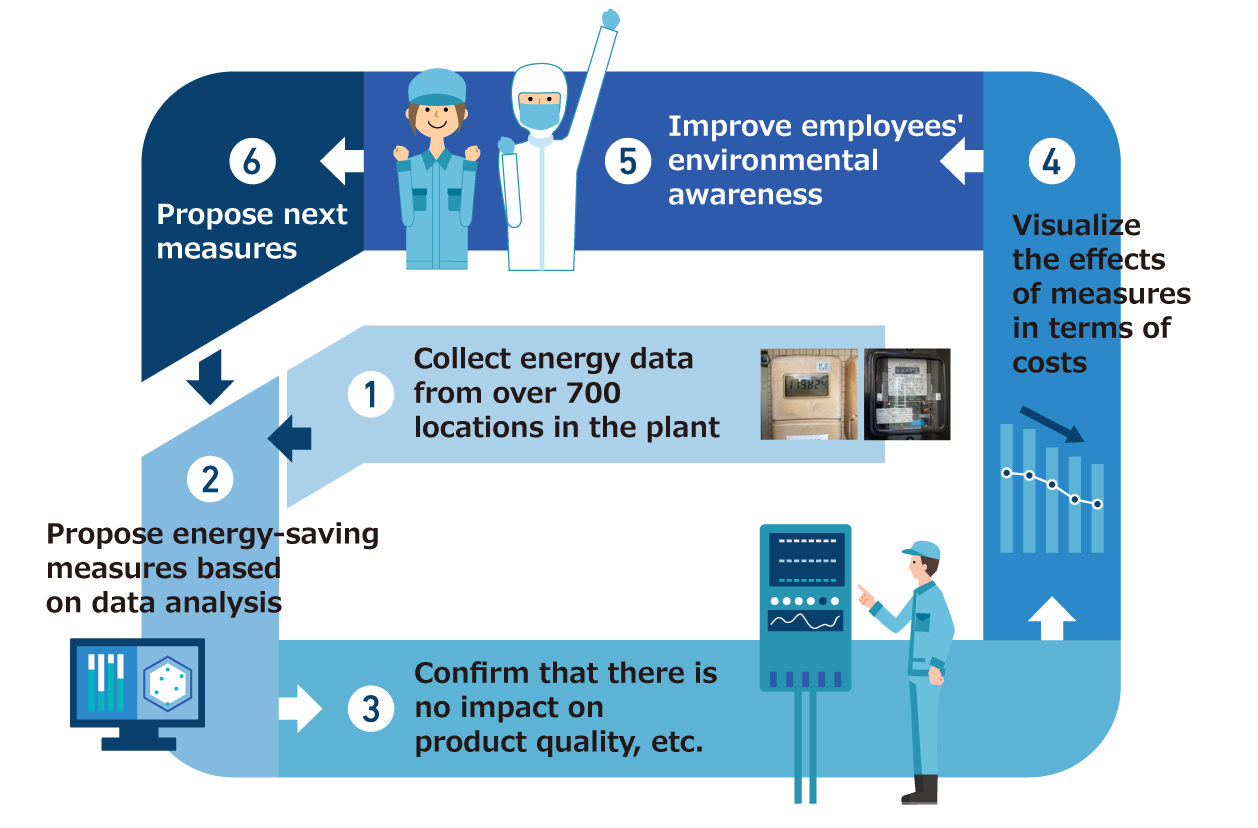
    At the Fujiyama Plant, since FY2022, we have been utilizing over 700 energy data collection points (for electricity, heat, and steam) installed throughout the plant to monitor daily usage and analyze the data. We identify energy losses and confirm the impact of energy-saving measures by comparing consumption before and after implementation, prioritizing actions accordingly. The results of data analysis and the effects of initiatives on energy consumption are visualized in monetary terms and shared with employees, raising individual awareness. As a result, significant progress was made in initiatives such as improving equipment operation, and in recognition of these efforts, the Fujiyama Plant received the “Shizuoka Prefecture Governor's Award for Global Warming Prevention Activities” for FY2023.
figure
Installation of energy-saving equipment
  • Replacement of fluorescent lights with LEDs
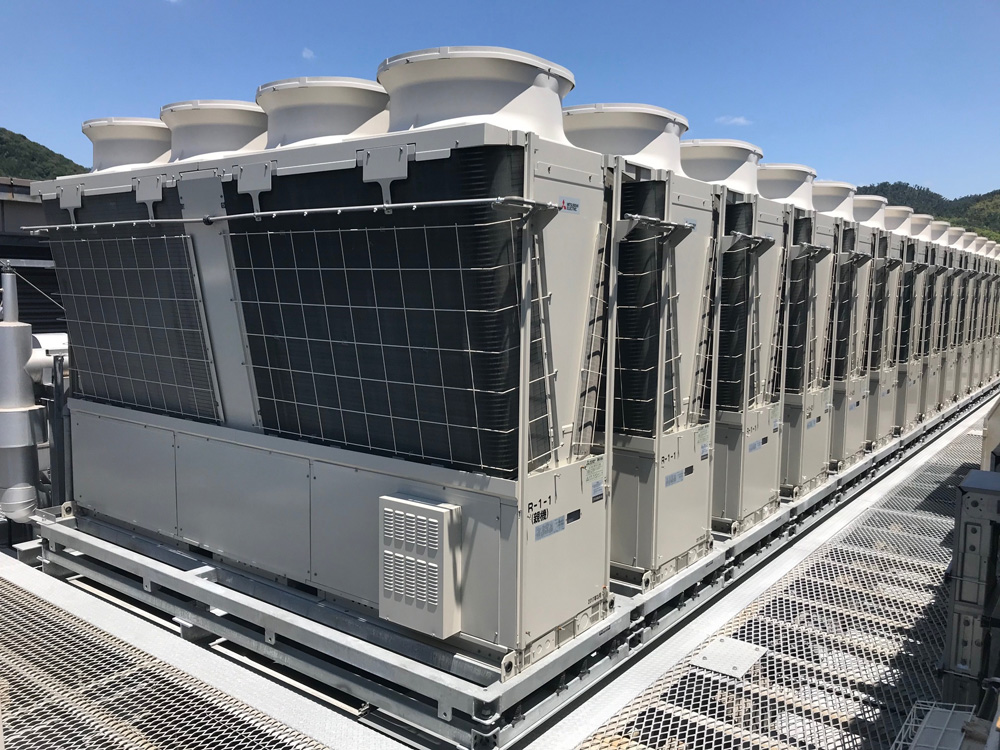
  • Upgrading heat source facility to module-type heat pump chiller
  • Installation of ultrahigh efficiency amorphous transformer with extremely low standby power
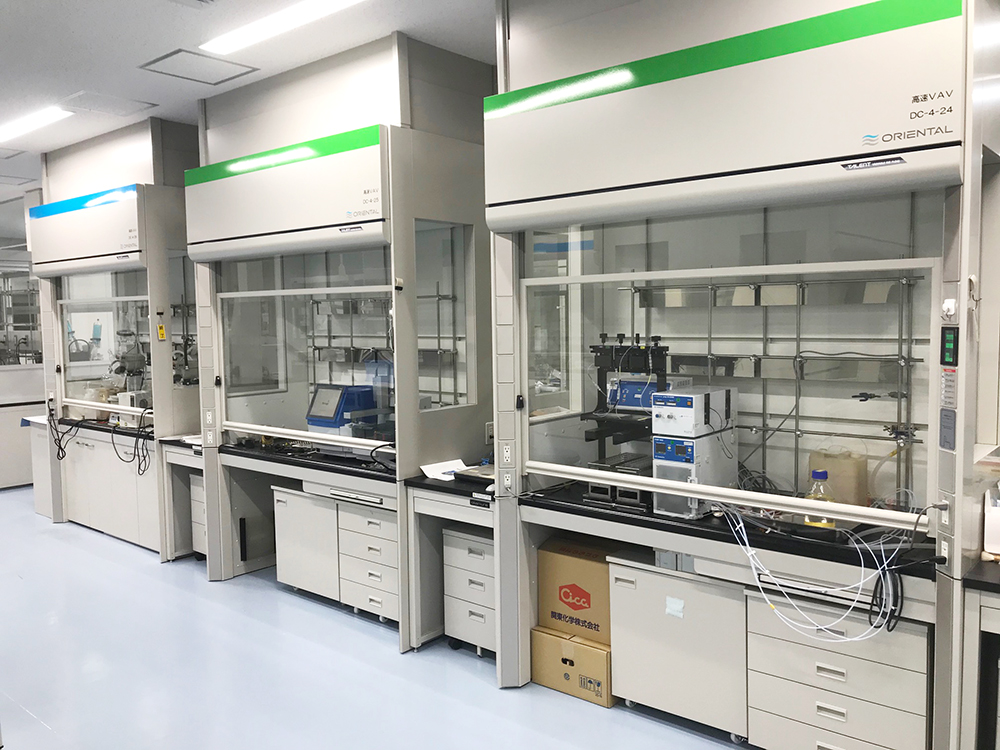
  • Installation of low air volume (push/pull type), ultrahigh speed variable air volume (VAV) local ventilation device
  • Installation of sterile isolator system that can limit the area subject to high-grade washing
  • Installation of energy-saving control devices for commercial air conditioners, HVAC systems, and refrigerators to reduce power consumption. Monitoring and controlling the operating status of compressors, which account for most of the electricity use in air conditioners and other equipment.
  • Replacement of solar panels whose power generation efficiency has declined
  • Installation of radiative cooling sheets to outdoor air conditioner units and refrigerators. This lowers the temperature around the compressors and improves operating efficiency.
photo
Module-type heat pump chiller (Minase Research Institute)
photo
Low air volume (push/pull type), ultrahigh speed variable air volume (VAV) local ventilation device (Minase Research Institute)
Participation in demand response

Demand response is positioned as an "optimization of electricity demand" under the Act on Rationalizing Energy Use and Shifting to Non-fossil Energy ("Revised Energy Conservation Act"). We have been striving to optimize the balance of demand and supply of electricity, in addition to electricity saving during regular time since FY2020 by saving and storing electricity (response) in response to the requests from power companies (demand).
At the Yamaguchi Plant, the system was modified to allow remote charging and discharging of NAS batteries for efficient demand response.
Electrification of Energy
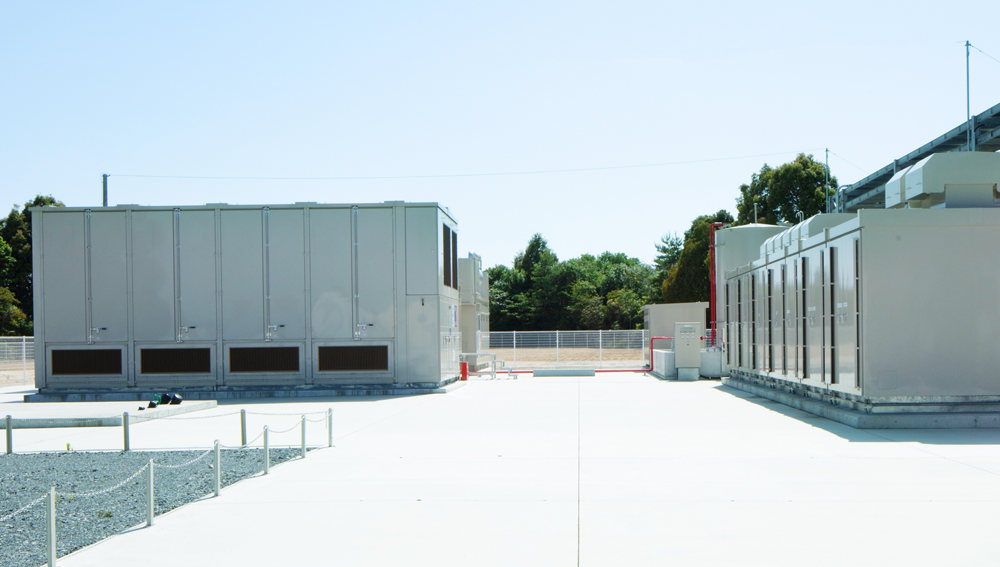
  • Installation of large-capacity power storage system (NAS battery system)
  • Consideration of switching to electric boilers
photo
Large-capacity power storage system (Yamaguchi Plant)
Fluorocarbon management

In accordance with the Act on Rational Use and Proper Management of Fluorocarbons (Fluorocarbon Emissions Control Act), we conduct activities, such as the identification of equipment subject to the Act, simple inspections/periodic inspections, generation of records, and calculations/reporting of leakage, etc. In FY2024, the calculated leakage of fluorocarbons was 0.6 ktons-CO2. We will continue to prevent leakage and promote the introduction of non-CFC (chlorofluorocarbon) and low-GWP (global-warming potential) equipment in view of the reduction of fluorocarbons emissions. In addition, during FY2025, we completely abolished all equipment using CFCs, which include ozone-depleting substances.

Environment-friendly office design

We have been promoting environmentally friendly office designs, and our Tokyo Building has obtained an S-Class rating under the CASBEE® (Comprehensive Assessment System for Built Environment Efficiency) *1 certification system. For our U.S. office, we have also selected a building that has received a Gold-level LEED*2 certification. In addition, the administration and welfare building at the Yamaguchi Plant has been designed in an environmentally friendly manner that makes use of energy-saving equipment.

  • An evaluation and rating method using the environmental performance of buildings. The quality of buildings is evaluated in a comprehensive manner based not only on considerations for the environment including use of energy-saving and environment-friendly materials, but also on the comfort of the indoor environment and considerations for the surrounding landscape. A class S rating is the highest rating in this five-level rating system.
  • An environmental performance evaluation system for buildings and city environments operated by a non-profit organization, the U.S. Green Building Council (USGBC). It is called LEED, from the initial letters of Leadership in Energy and Environmental Design.

Initiatives That Help to Conserve Resources in Research and Production Processes

Green sustainable chemistry initiatives

In order to develop more environmentally friendly manufacturing processes for active pharmaceutical ingredients (API), we adopt the Green Sustainable Chemistry (GSC) concept from the research and development stage. GSC is defined as "chemistry that is friendly to people and the environment and supports the development of a sustainable society." We use Process Mass Intensity* (PMI) as an indicator for evaluating the efficiency of API manufacturing, and are working to develop manufacturing processes for APIs in a manner that is conscious of reducing our impact on the environment from the research-and-development stage. As an example of PMI reduction, in a project currently in the clinical development phase (Phase 2), ongoing improvement efforts have resulted in a reduction of PMI by approximately 60% from Phase 1, and that robustness has been demonstrated in GMP manufacturing on a 100-kg scale. In addition, in recent years, we introduced a new function in our electronic laboratory notebooks that can automatically calculate the PMI for each reaction step, and we are working to establish a system that enables frontline researchers to conduct process development on a daily basis with environmental impact in mind.

  • PMI is calculated by dividing the total weight of raw materials and materials required for manufacturing APIs by the weight of the API that was manufactured.
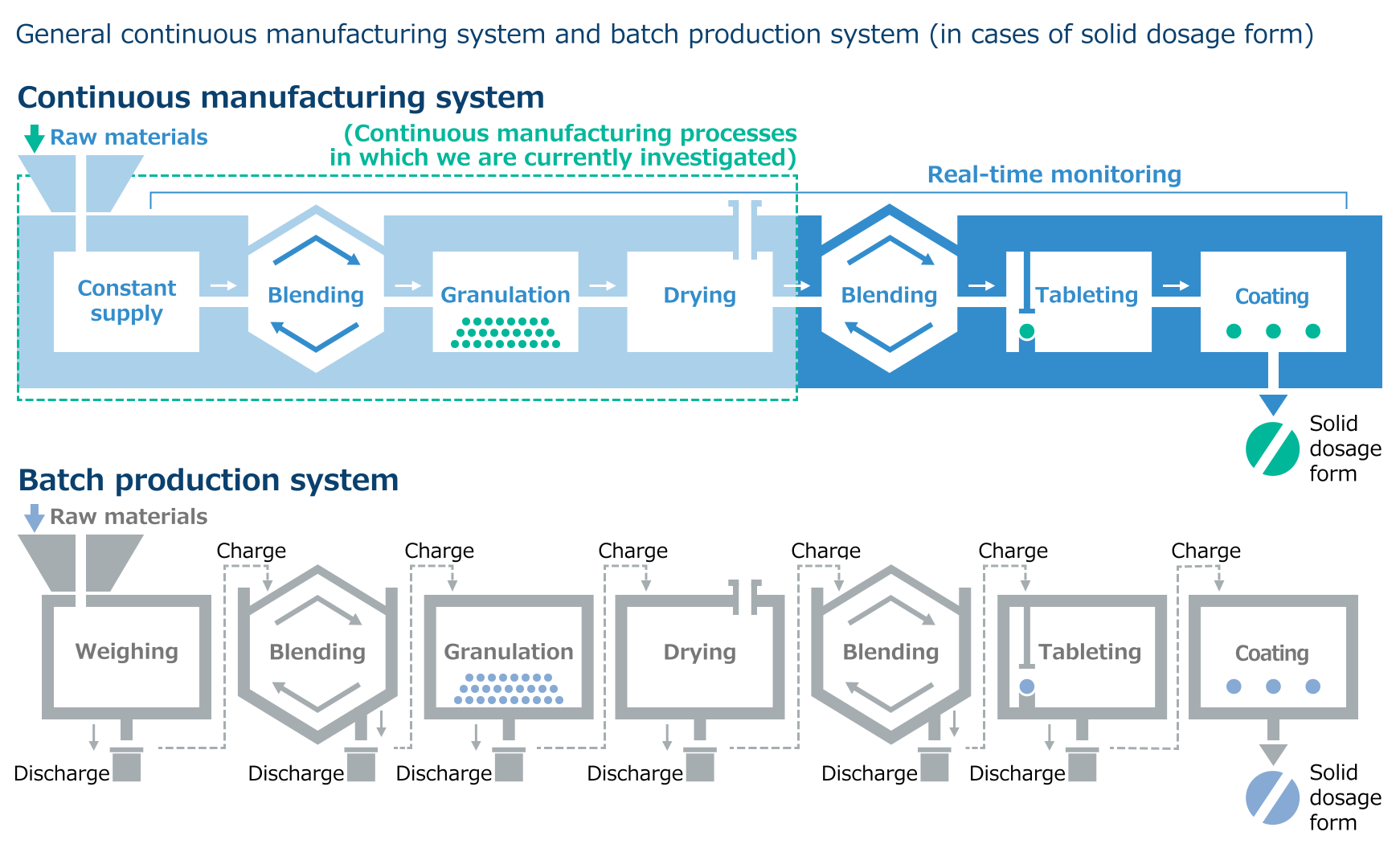
Introduction of a continuous manufacturing system

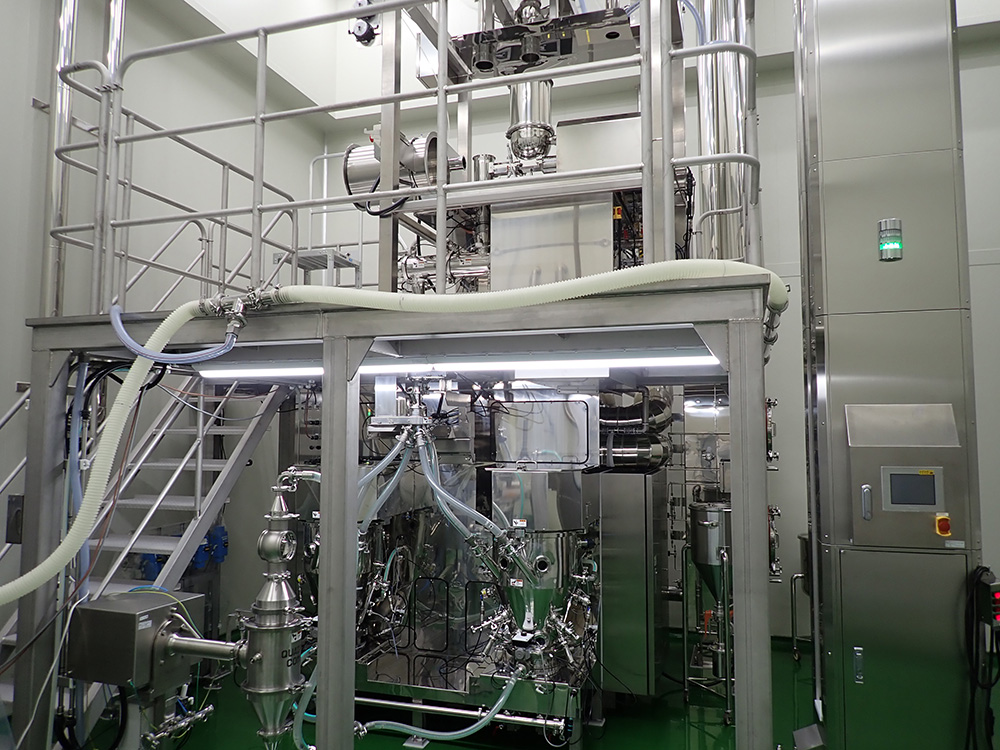
“Batch manufacturing,” which is the mainstream method in pharmaceutical manufacturing, involves a series of independent processes—such as weighing, mixing, granulation, drying, tableting, and coating—which are typical steps in the production of tablets, for example. The product is isolated in each process before moving on to the next, and this sequence is repeated to manufacture the pharmaceutical product. In “continuous manufacturing,” on the other hand, multiple processes are integrated into a single process by linking together compact equipment so that production is carried out continuously while each process is controlled for a fixed period of time. Continuous manufacturing therefore offers advantages such as more consistent quality as well as more efficient use of space. At ONO as well, for manufacturing methods that can be suitable for continuous manufacturing, we are in the process of transitioning the “granulation” and “drying” processes of the manufacturing process from batch manufacturing to continuous manufacturing, and we expect that this transition will enable us to reduce the amount of raw materials (weight) required for development stage by approximately 23%* compared to the batch manufacturing system. In addition, due to space saving, the continuous manufacturing system is expected to be able to reduce facility-operation-related energy consumption by 24.3% compared to batch production. We intend to further expand the scope of continuous manufacturing to achieve further energy and raw material reductions.

  • This % value compares the raw material savings achieved by transitioning the “granulation” and “drying” processes—which are part of the manufacturing process—to a continuous system with those of a typical batch system.

Continuous manufacturing processes in which we are currently investigated
photo
Our continuous manufacturing facilities
(Fujiyama Plant)

SubstituteSwitching to Renewable Energy

Installation of equipment
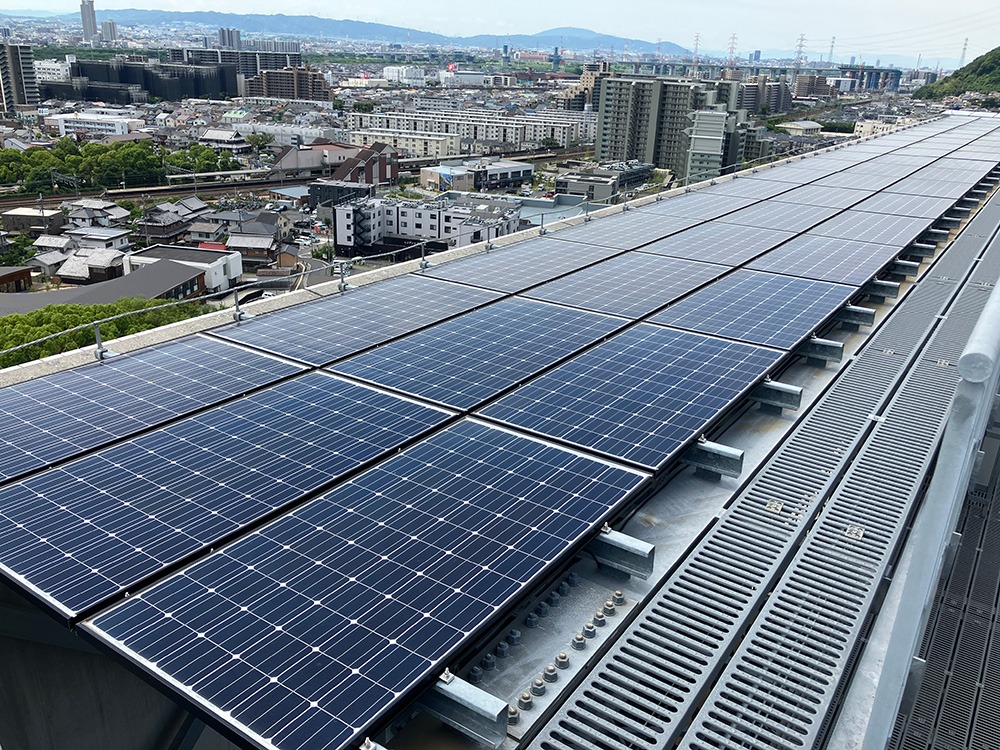
  • Introducing and operating solar power generation facilities: Head Office building (FY2003), Minase Research Institute (FY2015), Tokyo Building (FY2017)
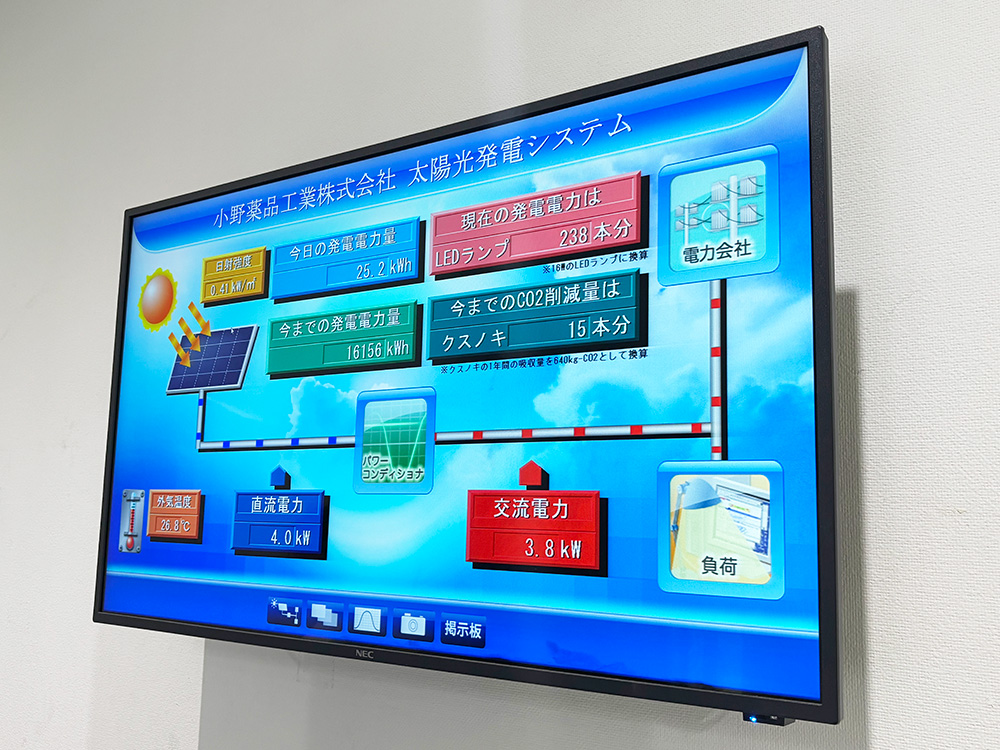
    The solar panels at ONO’s Headquarters were replaced after 20 years due to decreased power generation efficiency. In addition, we are also working to improve our employees’ awareness of the environment by installing a solar power monitor near the service entrance to visualize the power generation status of the rooftop solar panels.
photo
Solar panels (Minase Research Institute)
photo
Solar power monitoring system (Head office)

Procuring carbon-neutral energy

  • Procurement of solar power through PPA (Power Purchase Agreement): From FY2024, a portion of the electricity contracts for Minase Research Institute, Joto Product Development Center, and Head Office have been switched to PPA. Under our PPA, a dedicated renewable energy facility is installed and operated by the power producer, and the generated renewable electricity is supplied to us. Unlike renewable energy menu contracts, which use certificates, PPA allows us to directly use renewable electricity.
  • Purchase of electricity under a renewable energy-based electricity menu contract: Minase Research Institute (from FY2019), Yamaguchi Plant (from FY2022), Fujiyama Plant (from FY2023), Tsukuba Research Institute (from FY2023), Head Office (from FY2024), and company-owned buildings (from FY2025)
    Furthermore, the Fujiyama Plant, Yamaguchi Plant, and Tsukuba Research Institute have been sourcing 100% of their purchased electricity from renewable energy sources since FY2023; the Minase Research Institute, Joto Pharmaceutical Product Development Center, and Headquarters have been doing so since FY2024; and our other company-owned buildings (excluding the Takamatsu Building, the former Osaka Branch, and the former Awaji Plant) have been doing so since FY2025.
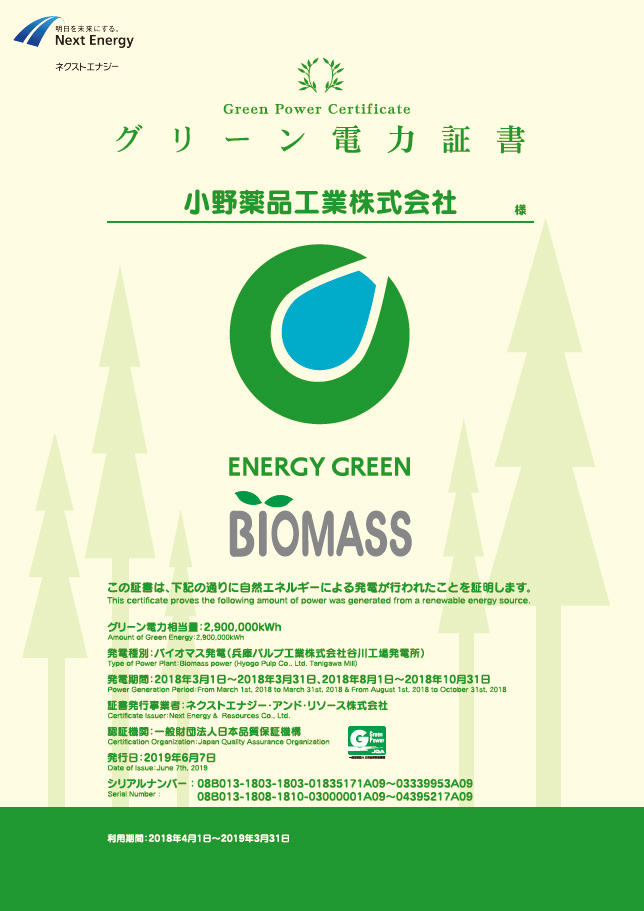
  • Purchase of Green Power Certificates (from FY2018), J-Credits (from FY2019), and Non-Fossil Certificates (from FY2021)
    We promote the use of renewable energy by purchasing certificates for electricity generated from renewable energy sources.

Green Energy CertificateGreen Energy Certificate

CompensateOffset through the use of voluntary credits

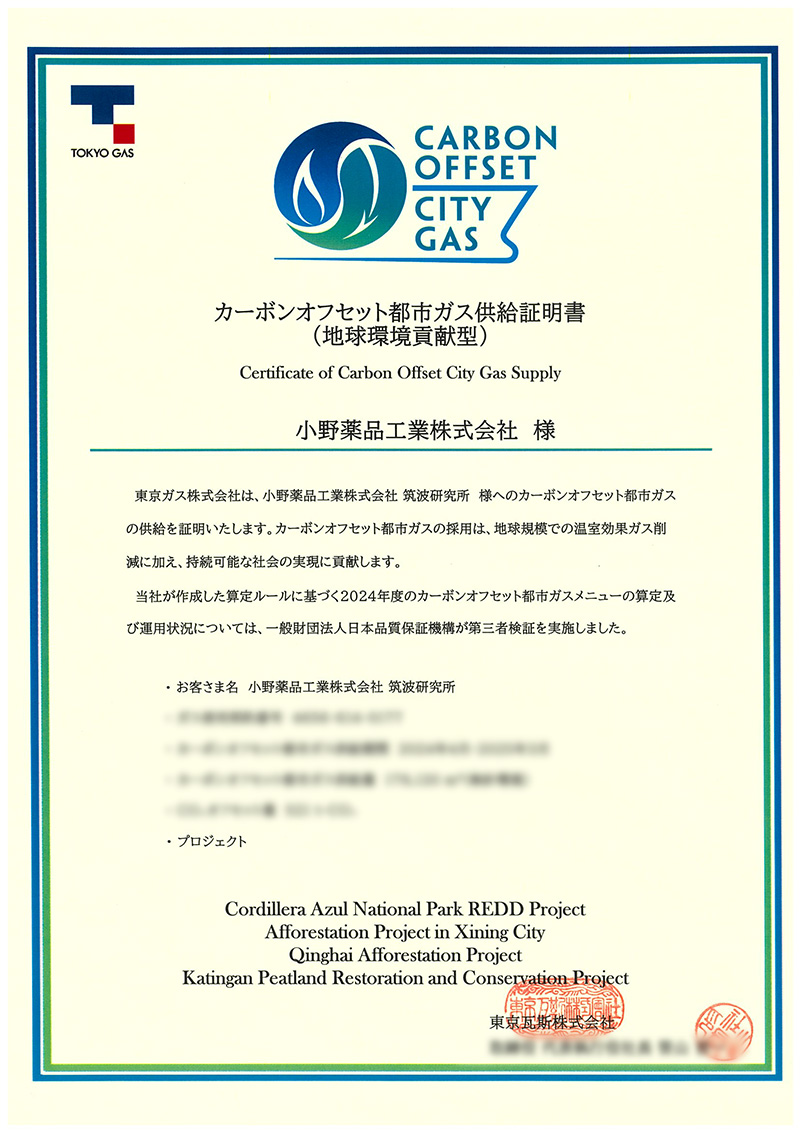
  • Introducing Carbon offset city gas: Tsukuba Research Institute (from FY2021), Joto Pharmaceutical Product Development Center (from FY2021), and Yamaguchi Plant (from FY2023)
    Carbon offset city gas is city gas that offsets (carbon offsets) the GHG produced during the process from raw material mining to combustion with CO2 credits, and is considered to produce no CO2 on a global scale even when burned. The credits are issued by highly reliable international organizations and consist of projects that meet the procurement requirements, quality standards, etc. of the companies that adopt them. These procurement requirements, quality standards, etc., include points such as no significantly adverse effects on the region or ecosystem (in the case of forest projects, avoiding logging and deforestation).

Certificate of Carbon offset city gas SupplyCertificate of Carbon offset city gas Supply

ONO PHARMACEUTICAL CO.,LTD., ONO PHARMACEUTICAL CO.,LTD., system

Initiatives to reduce Scope 3 GHG emissions

Collaboration with business partners is essential to reducing Scope 3 emissions. That is why we are working together with business partners in our supply chain to solve societal issues by promoting sustainability-related initiatives in areas such as the natural environment, human rights, and working conditions (For more details, please see here.).
In the logistics from our distribution centers to pharmaceutical wholesalers, we began joint transportation in compliance with GDP guidelines with four companies in January 2023. This initiative not only enhances the quality assurance of prescription pharmaceuticals, but also improves loading efficiency, leading to a reduction in the number of truck trips and expected CO2 emissions. 
Furthermore, in FY2024, we launched an initiative to consolidate shipping days and reduce delivery frequency, with the aim of strengthening a sustainable logistics system and addressing the “2024 Logistics Problem*.” As a result, transportation efficiency has been further improved, contributing to work style reforms for workers, the stable retention of trucks and drivers, and further reductions in CO2 emissions.

  • The “2024 Logistics Problem” refers to a series of challenges faced by the Japanese logistics industry. Due to stricter regulations on truck drivers’ working hours, there are concerns about driver shortages and impacts on logistics.


As part of our GHG reduction efforts, we started using the “GreenEX” service in April 2025, which achieves virtually zero CO2 emissions for travel on the Tokaido, Sanyo, and Kyushu Shinkansen lines. “GreenEX” is a service that uses CO2-free electricity* to make CO2 emissions from Shinkansen travel virtually zero. By introducing this service, we reduced CO2 emissions associated with our employees’ business trips by approximately 200 metric tons of CO2 in FY2025. We will continue to promote decarbonization initiatives.
  • CO2-free electricity: Electricity with non-fossil certificates derived from renewable energy sources such as solar power, which do not emit CO2 during generation.
logo
ONO PHARMACEUTICAL CO.,LTD., ONO PHARMACEUTICAL CO.,LTD., system

External evaluation and awards regarding our measures for climate change

  • In the evaluation on climate change conducted by the CDP, a global environmental non-profit organization, we have been selected as an A-List company, the highest rating, for eight consecutive years. (FY2018 - FY2025)
  • Under the Act on Rationalizing Energy Use and Shifting to Non-fossil Energy ("Revised Energy Conservation Act"), we have received the highest S class by the Agency for Natural Resources and Energy for ten consecutive years in corporate energy conservation excellence. (FY2015 - FY2024)
  • We have been selected for the A rank for three consecutive years in the “Fluorocarbon Countermeasures Rating” by the Japan Refrigerants and Environment Conservation Organization, which promotes proper management of fluorocarbons together with the Ministry of Economy, Trade and Industry and the Ministry of the Environment. (FY2015 - FY2024)
  • We were selected as an "Environmentally Sustainable Corporation" in the 5th ESG Finance Awards Japan Environmentally Sustainable Corporation Section (hosted by the Ministry of the Environment) for meeting certain standards for information disclosure. (FY2023, FY2024)
  • The Fujiyama Plant received the “Shizuoka Prefecture Governor's Award for Global Warming Prevention Activities” for raising employee awareness on energy saving and improving equipment operation by visualizing energy consumption and other data at the plant. (FY2023)
  • In the performance report based on the Osaka Prefectural Ordinance on the Promotion of Climate Change Countermeasures, we received the “Osaka Climate Change Countermeasures Award, Special Award.” We have also been selected for the “Gold” decarbonization rank and an “S” rating (FY2025).
ONO PHARMACEUTICAL CO.,LTD., ONO PHARMACEUTICAL CO.,LTD., system