Close

Recognizing that our business activities are supported by a sound global environment, we are working to reduce environmental risks that affect biodiversity and contribute to the maintenance and conservation of biodiversity, with the aim of realizing a sustainable and prosperous society. We have endorsed the “Keidanren Initiative for Biodiversity Conservation” by KEIDANREN (Japan Business Federation) and make donations to the Keidanren Nature Conservation Fund.
For information about the “Keidanren Initiative for Biodiversity Conservation” and the list of companies and organizations that have endorsed this initiative, please click here.
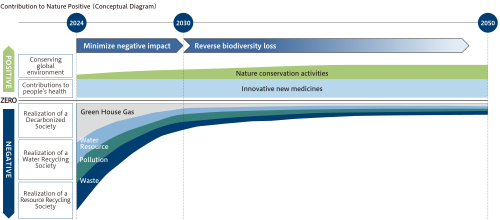
An abundant global environment (ecosystem) not only provides food, water, and many other benefits to our lives, but it also contributes to mitigating climate change and disasters, restricting the generation of infectious agents, parasitic insects, etc., and supporting mental and cultural well-being. It therefore plays an extremely important role in human health. So that we can pass on a rich global environment to the next generation, we assess the dependencies and impacts of our business activities on the global environment and promote a range of activities (environmental impact assessment of pharmaceutical products, management of chemical substances, management of genetically modified organisms and pathogens, pollution control of air, water, and soil, etc.) to minimize these impacts. While contributing to people’s health through the creation of innovative new medicines, we will also work together with local governments, NPOs, NGOs, and other stakeholders to help achieve “Nature Positive” by 2030 – halting and reversing the loss of biodiversity to put nature on track to recovery - through our ongoing initiatives.
In FY2024, we identified the nature-related risks and opportunities associated with our business activities in line with the Taskforce on Nature-related Financial Disclosures (TNFD) final recommendations (v1.0). We will appropriately disclose information not only on climate change but also on biodiversity. For more details, please see the page of our website titled “Information Disclosure Based on the TNFD Recommendations.”
The API (including its metabolites when administered to human) that is produced during the manufacturing process or discharged into the environment through excretion following the proper use and disposal of medicines may affect ecosystems due to their physiological effects, as well as their physicochemical and biological properties. In our manufacturing plants, we consider the scientific characteristics of API, implement deactivation treatments, such as oxidative decomposition, reduction, and alkaline hydrolysis and prevent the release of API into the environment. We also estimate occupational exposure limit (OEL) based on the results of animal testing and human clinical trials and define an API in Category 4 (chemical substances with OEL lower than 10 μg/m3) or higher as "highly active API." All wastewater containing highly active API is outsourced to be incinerated and we do not discharge it into the environment.
We appropriately conduct the environmental assessment of API in accordance with local guidelines. We predict the hazards to the environment of new drug application candidates and launched APIs based on the in silico quantitative structure-activity relationship (QSAR) model, and disclose the results in safety data sheets (SDS). We also sequentially evaluate the effects of our in-house developed launched API on aquatic organisms and disclose the results in SDSs.
We are working to reduce the use of chemical substances. We are also committed to reducing emissions of chemical substances not only in compliance with laws and regulations but also in recognition that these emissions may impact human health and the ecosystem.
We appropriately manage chemical substances that may have harmful effects on human health and ecosystems in accordance with the Pollutant Release and Transfer Register (PRTR) system under Japan‘s “Act on the Assessment of Releases of Specified Chemical Substances in the Environment and the Promotion of Management Improvement.” In FY2025, the amount of PRTR Class 1-designated chemical substances handled in quantities of 1 ton or more was 1.8 tons, and their associated atmospheric emissions were 0.0 tons (vaporized solvents were adsorbed and removed by activated carbon installed in the exhaust gas treatment system). Including acetonitrile, which was excluded from the list of PRTR Class I-designated chemical substances in FY2023, the handling amount and atmospheric emissions were 8.5 tons and 0.3 tons, respectively. Emissions into the environment remain at a low level. We also legally and appropriately manage chemical substances that are not subject to PRTR reporting requirements. We will continue to work to reduce emissions into the environment through appropriate chemical substance management.
All PCB-containing waste was properly disposed of by FY2025 in compliance with the Japan‘s “Act on Special Measures Concerning the Promotion of Proper Treatment of PCB Waste.”
The management of radioisotopes is conducted appropriately in accordance with the Japan’s "Act on Prevention of Radiation Hazards due to Radioisotopes, etc." and the results are reported to the Nuclear Regulation Authority as a radiation management status report every fiscal year.
As for genetically modified organisms and pathogens used in drug discovery research and manufacturing activities, we are preventing their spread into the environment and unintended release by complying with in-house regulations based on relevant laws and regulations such as the “Act on the Conservation and Sustainable Use of Biological Diversity through Regulations on the Use of Living Modified Organisms” (Cartagena Act) and the “Act on the Prevention of Infectious Diseases and Medical Care for Patients with Infectious Diseases” (Infectious Diseases Control Law). In addition, to promote the appropriate use of these research samples, the in-house committee on biosafety continues to provide education and training to laboratory staff and reviews experimental applications.
In the manufacturing plants and research institutes, we comply with Japan’s Acts such as the "Air Pollution Control Act", the "Water Pollution Control Act", the "Sewerage Act", the "Soil Contamination Countermeasures Act", the "Act on the Assessment of Releases of Specified Chemical Substances in the Environment and the Promotion of Management Improvement." We also conclude pollution prevention agreements with local governments in order to reduce our environmental impact.
Nitrogen oxides (NOx), sulfur oxides (SOx), and smoke dust (particulate matter: PM) are measured as air pollution indices. NOx emissions in FY2025 remained low at 5.7 tons. Since none of our facilities use high-sulfur content fuels (heavy oil, coal, etc.), we are maintaining SOx emissions at a very low level of 0.0 tons. PM emissions in FY2025 were also maintained at a low level of 0.3 tons.
To prevent water pollution, wastewater from manufacturing plants and research institutes is managed in accordance with standards agreed upon with local governments or our own voluntary standards, both of which are stricter than applicable regulatory requirements. A public sewage system has not been developed at the Fujiyama Plant. Therefore, wastewater generated from business activities at the Fujiyama Plant is treated with sedimentation, activated sludge, pH adjustment, and disinfection at our on-site wastewater treatment facility. Following treatment, the wastewater quality is verified before the treated water is discharged into a river. Wastewater generated from business activities at the Yamaguchi Plant is treated with primary processes such as disinfection at the on-site facility, followed by secondary processes at a treatment facility in the industrial park, and then discharged to a river. The biochemical oxygen demand (BOD), an index of wastewater quality, of wastewater discharged to public rivers in FY2025 remained low at 0.12 tons. We manage hazardous chemical substances using voluntary control targets that are ten times more stringent than applicable regulatory limits (set at one-tenth of the legally permitted levels).
As a precaution against emergency incidents that could result in wastewater containing hazardous substances entering the drainage system, we have installed storage tanks to contain such wastewater. In addition, dedicated collection tanks have been installed for wastewater containing highly active APIs to ensure that it remains isolated from the drainage system.
| Drainage site | Scope | Unit | FY2022 | FY2023 | FY2024 | FY2025 | |
|---|---|---|---|---|---|---|---|
| BOD | Total | Production and research sites | Ton | 1.2 | 0.79 | 0.77 | 0.76 |
| Sewerage system | 1.0 | 0.66 | 0.64 | 0.63 | |||
| River | 0.15 | 0.12 | 0.14 | 0.12 |
We strictly control hazardous substances to prevent soil pollution. Measures are taken to prevent containers of hazardous chemicals from falling over on storage shelves. We also conduct regular inspections of drainpipes for leaks and are replacing them with earthquake-resistant flexible piping. If soil pollution is identified, we will consult with the relevant authorities and take appropriate measures, including preventing the spread of contamination and implementing remediation measures.
In recent years, extreme weather events have become more frequent as a result of global warming. We have established emergency response manuals to prepare for accidents and emergency situations caused by such events and provide training to minimize potential environmental impacts. In addition, we conduct drills every year in preparation for accidents and emergencies that may lead to water pollution and soil contamination.
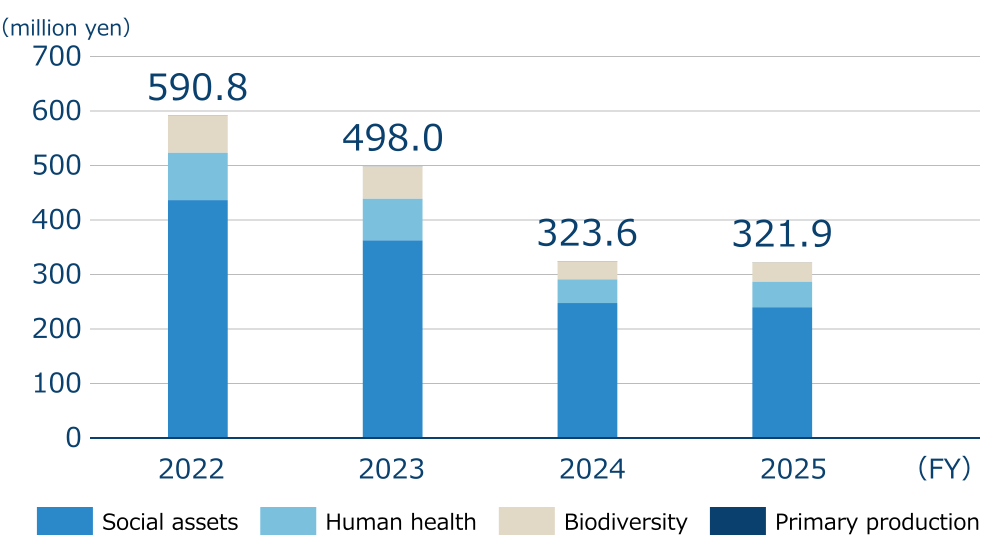
The environmental impacts of our business activities were monetized using the Life-cycle Impact assessment Method based on Endpoint modeling (LIME) 3, a type of Life Cycle Assessment (LCA). We classfied our FY2025 business activities into four damage assessment categories and evaluated their impacts. Namely, these categories were human health, social assets (impact associated with the consumption of fossil fuels and mineral resources, etc.), biodiversity, and primary production (impact associated with waste generation and the use of land and forests, etc.). The environmental impact associated with the consumption of social assets was the highest (239 million yen), followed by human health (47 million yen), biodiversity (36 million yen), and primary production (0.4 million yen). On the input side, the principal negative environmental impacts of our business activities were associated with the upstream value chain of city gas used in our operations, including the extraction, processing, and supply of natural gas. On the output side, greenhouse gas emissions were identified as the primary source of environmental impact. Since the introduction of this assessment in FY2022, the negative environmental impacts of our business activities have decreased by 46%. Based on these findings, we will continue our efforts to further reduce our environmental footprint.
Quantification of environmental impacts of our business activities
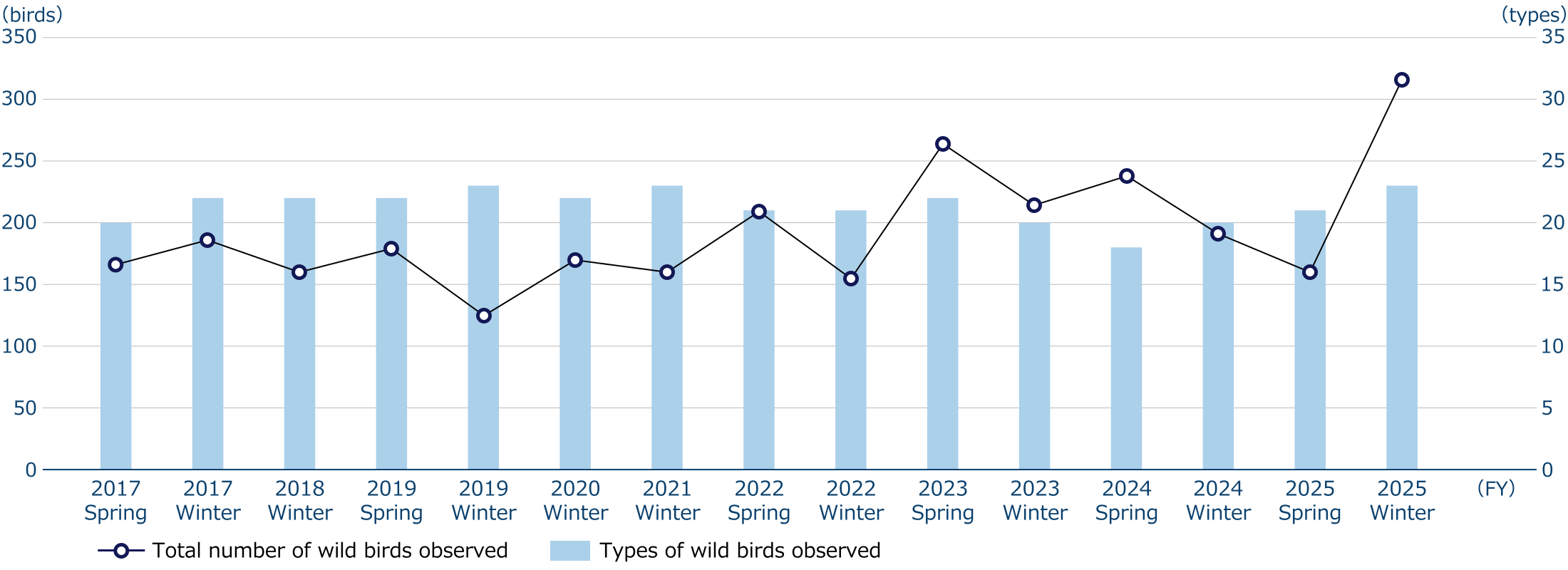
The Fujiyama Plant, one of our main plants, has a green space (36,000 m2) on its premises that is almost equivalent to the size of a baseball stadium. Since 2017, we have implemented conservation activities and community engagement initiatives through bird surveys as part of our environmental goals under our environmental management system (ISO14001). Every year, during the spring breeding and wintering seasons, we request the Wild Bird Society of Japan to conduct surveys* (up to four times per year) and use the results of those surveys as the basis for efforts to protect the abundance of biodiversity at the Fujiyama Plant (establishing green zones that are intentionally not mowed, planting trees that birds like, maintaining ponds and waterways, etc.). There has been no significant change in either the bird species or total number of birds recorded over a nine-year period, which suggests that ONO's manufacturing activities have not had a significant impact on local biodiversity. These results are also shared with Fujinomiya City and utilized in conservation activities related to biodiversity in local communities.
Wild bird surveys at the Fujiyama Plant
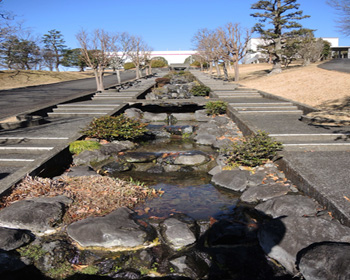 Waterways on the factory premises
(Watering holes for wild birds)
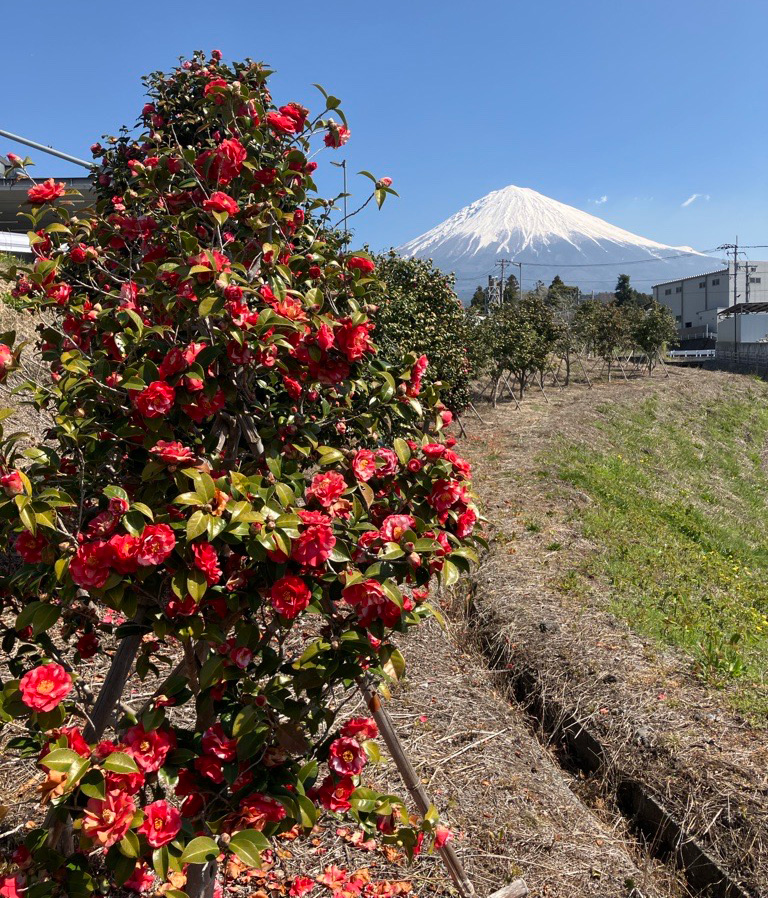 Planting camellia trees favored by Japanese white-eyes and brown-eared bulbuls
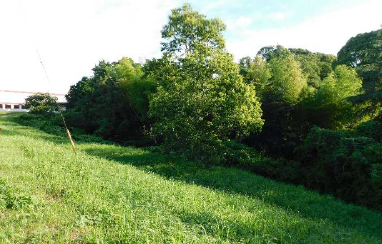 Grassland and woodland on the factory premises
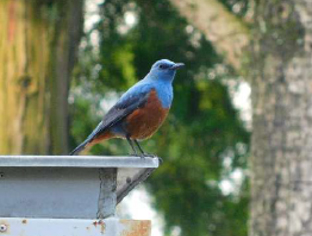 Blue rock thrush
(Passeriformes, Muscicapidae)
observed in May 2025
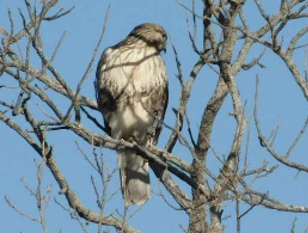 A common buzzard
(Accipitriformes, Accipitridae)
observed in January 2026